The Summer Cottage Tradition
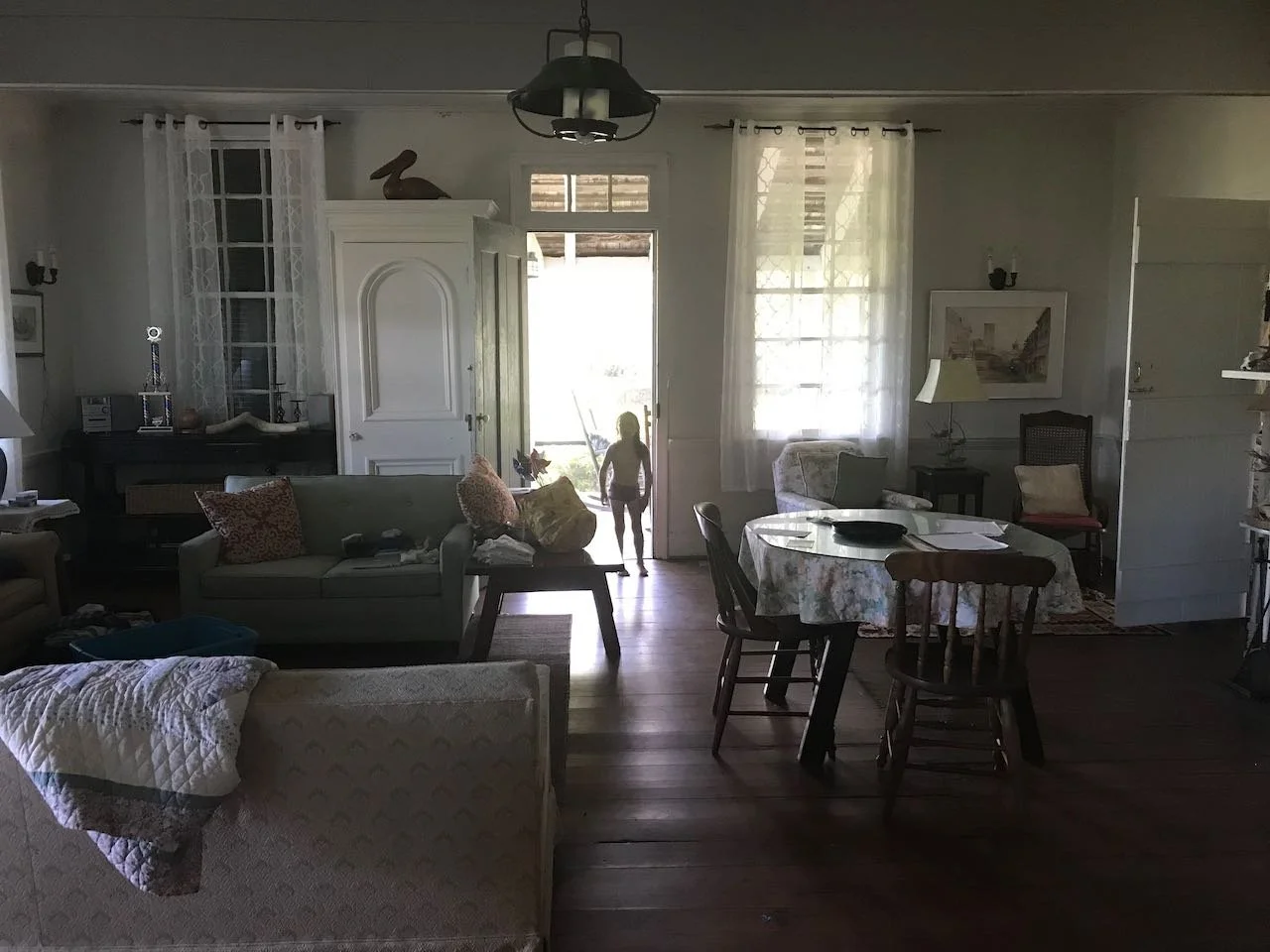
One of my favorite Pawley’s Island, South Carolina rentals, full of patina, and of old furniture too sturdy for a hurricane or a wet child to damage.
How seasonal rental culture shaped our expectations of the away-from-home home
Growing up, my family returned to the same beach houses on the South Carolina coast — never just once, always at least twice, sometimes for several summers running before life rearranged our timing. I loved the wonkiness of those houses. The furniture was a mix of multiple generations of antiques and cast-offs that had been retired from the "good house" to the beach house, an honorable category of object. The pans were never quite right, and I loved making dinner with them. What was a chore became a challenge. The wooden countertops seemed ancient, scarred. You could— and should— clean a fish on them. The furniture I would never have chosen for myself was perfect, because you could sit down in a wet bathing suit and nobody cared — least of all the Naugahyde chair. Companion chairs were of such old mahogany, and had survived so many hurricanes, that a dripping child was the least of their worries.
This is the summer cottage — not a hotel, not a house, is a deliberately simplified and seasonal place. What’s missing makes these spaces so evocative.
The Cottage as a Category
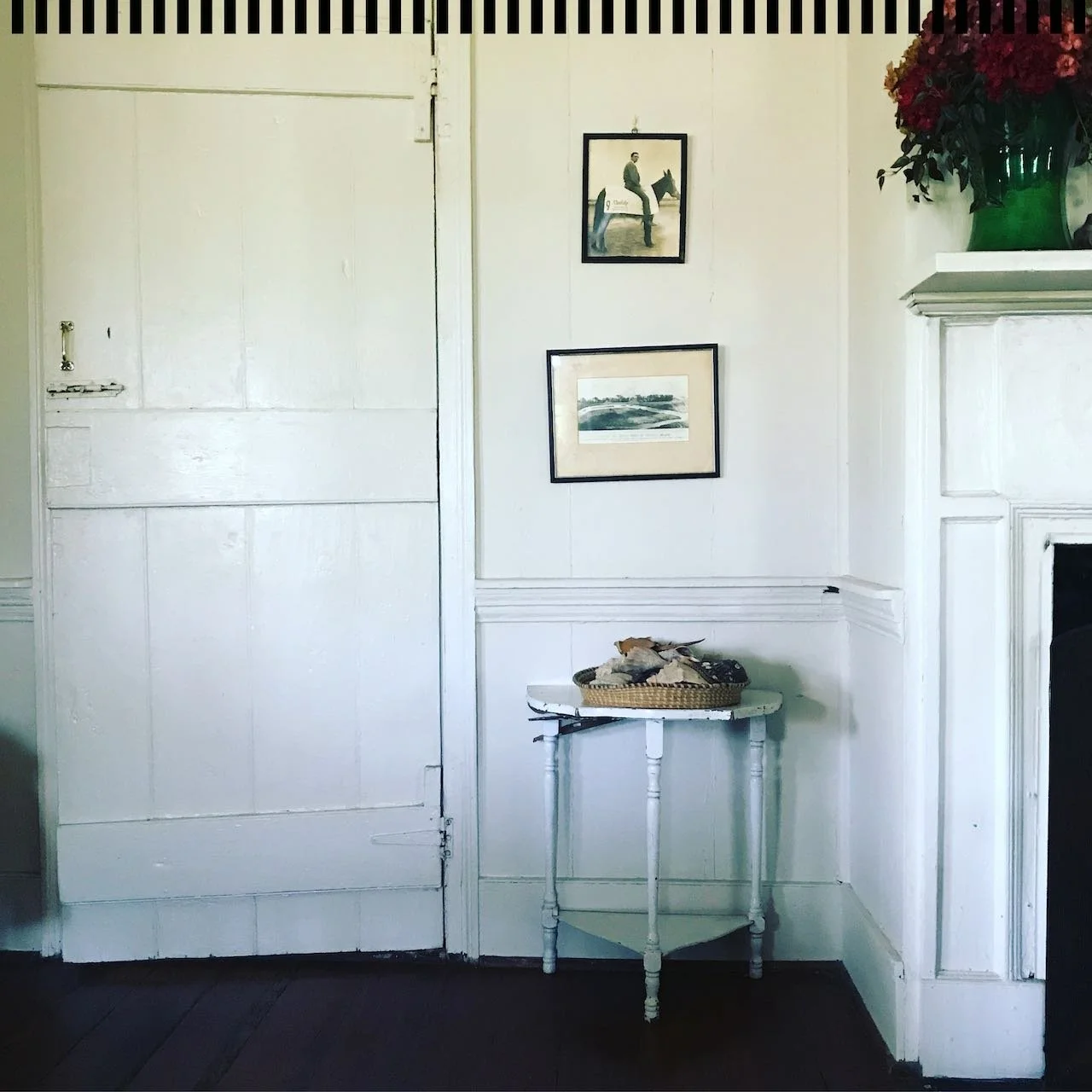
This 1830s beach house is full of nothing and also everything.
The short-term rental market has developed a strong tendency toward what I think of as the “freshly-unboxed” aesthetic: everything new, everything neutral, nothing that has ever belonged anywhere before. (Amogh Dimri’s recent Atlantic Article unpacks America’s pivot to the bland and to the gray). You can almost smell the Amazon warehouse through the listing photos. The resulting spaces are inoffensive, like waiting rooms, designed to alienate no one, surprise no one, and are, therefore, remembered by no one.
The summer cottage tradition operates from an opposite premise. The character of a good cottage is settled and predates the guest by decades. The house knows what it is. The guest arrives into a space that has already been decided — this far more restful than arriving into a blank. A guest doesn’t have to work to make the space a place— the house is blessedly itself, and needs nothing from its temporary visitor.
This is why antiques and vintage pieces do real psychological work in a rental, and why I include them in every design. They're not just stylistically pleasing (though they are). They're evidence that the space has a history, that someone has cared for it across time, that the guest is not the first to sit in this chair by this window. That continuity is what guests are really buying when they book a cottage, even when they don't have the language for it.
The payoff is practical as well as philosophical. Guests who feel that sense of belonging come back. Repeat guests are the best guests — they know where things are, they've already self-selected as people who love your particular space, and they arrive with affection rather than skepticism. The wobbly dock becomes, over seasons, a feature they look forward to. The mugs become theirs, in a small way. They anticipate with glee using the loudly colored fish-shaped plates and they put away the mismatched highballs reverently.
This eternal weekend feeling has some interesting historical antecedents— The idea of “vacation” is a relatively new one, and its beginnings in America have shaped our expectations for our rental homes.
The Adirondack Tradition
The Adirondack great camps of the late nineteenth and early twentieth centuries — those extraordinary compound estates built for families like the Vanderbilts and the Rockefellers — established a curious aesthetic that has outlasted their class context. Bark-on log construction, stone fireplaces, taxidermy and fishing trophies on the walls persist in today’s “cabin aesthetic”, but stripped of personal meaning. Then, rusticity was a philosophy. Now, the mass production of the “look” has negated any true rusticity— faux aged log furniture sets do not tell the story like bent willow harvested from the estate. A glicee print of a black bear is not equivalent to the rug uncle Teddy shot.
These camps weren’t only for Rockafellers and Roosevelts. The Adirondack camp existed at every price point, and that it was never the only model. My friend Margo spent every summer of her childhood in a Jewish bungalow colony — she describes it as exactly like Dirty Dancing, which conjures the social world, the mix of families, the sense of a summer that was a complete world. Her father drove up from their small New York City apartment on weekends. They were not rich. The colony was not a luxury. It was a commitment, a priority, a thing the family organized its year around.
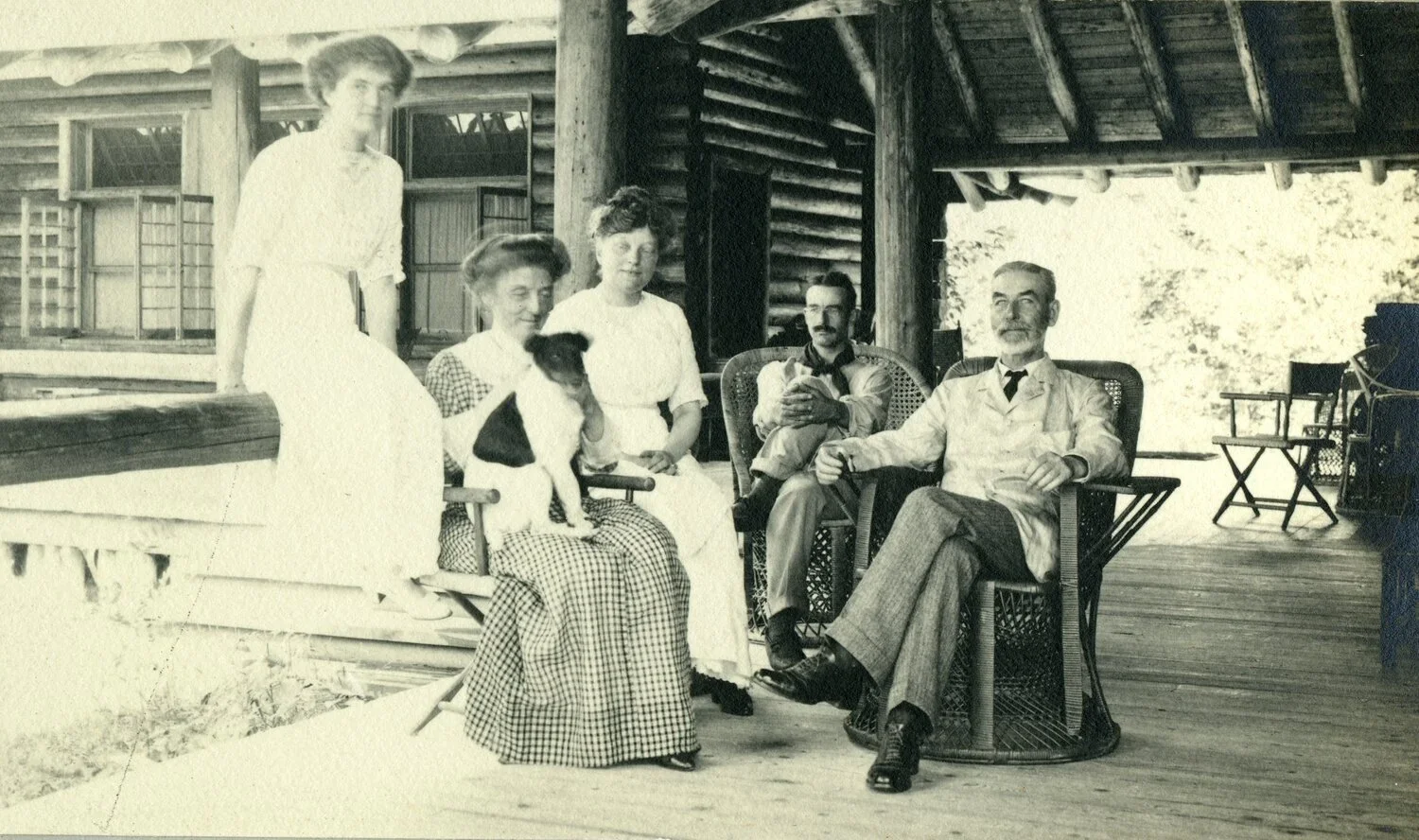
A family enjoying the conspicuous consumption of rusticity, brought about in part by William H. H. Murray's popular book "Adventures in the Wilderness: Or Camp-Life in the Adirondacks" published in 1869. This was an American analogue to the 18th British romanticization of the English Landscape post-urbanization.
The ethic is the same across all of these traditions, whatever form they take: Rusticity is a choice rather than deprivation.
This matters because it tells us something about the ethic at the center of the tradition. Rusticity, in the Adirondack camp, was a choice — not a deprivation, but a considered rejection of comfort's more ornate expressions. Rough-hewn becomes charming when it is intentional and honest. The exposed beam, the bare floor, the lack of pretension — these read very differently when they are clearly chosen rather than merely present. Guests understand the difference intuitively, even when they can't articulate it. And there is something quietly character-building about a week in a place that asks you to adjust to it rather than the other way around— normal life can swaddle us with electric can-openers, the Door Dash of the 1950s. Summer time is when we spend all day thinking about what to have for dinner.
Cape Cod and the Beach House
The Cape Cod rental tradition (which truly stretches up and down the East Coast of the U.S. from Maine into South Georgia, and architecturally into Florida, gives us a different set of vernacular forms: The screen porch — the house's real living room, where dinner happens and where the family reassembles at dusk; The outdoor shower, which is its own small pleasure and an architectural acknowledgment that the outdoors is the point. Domestic life compresses into fewer rooms, producing not inconvenience but intimacy.
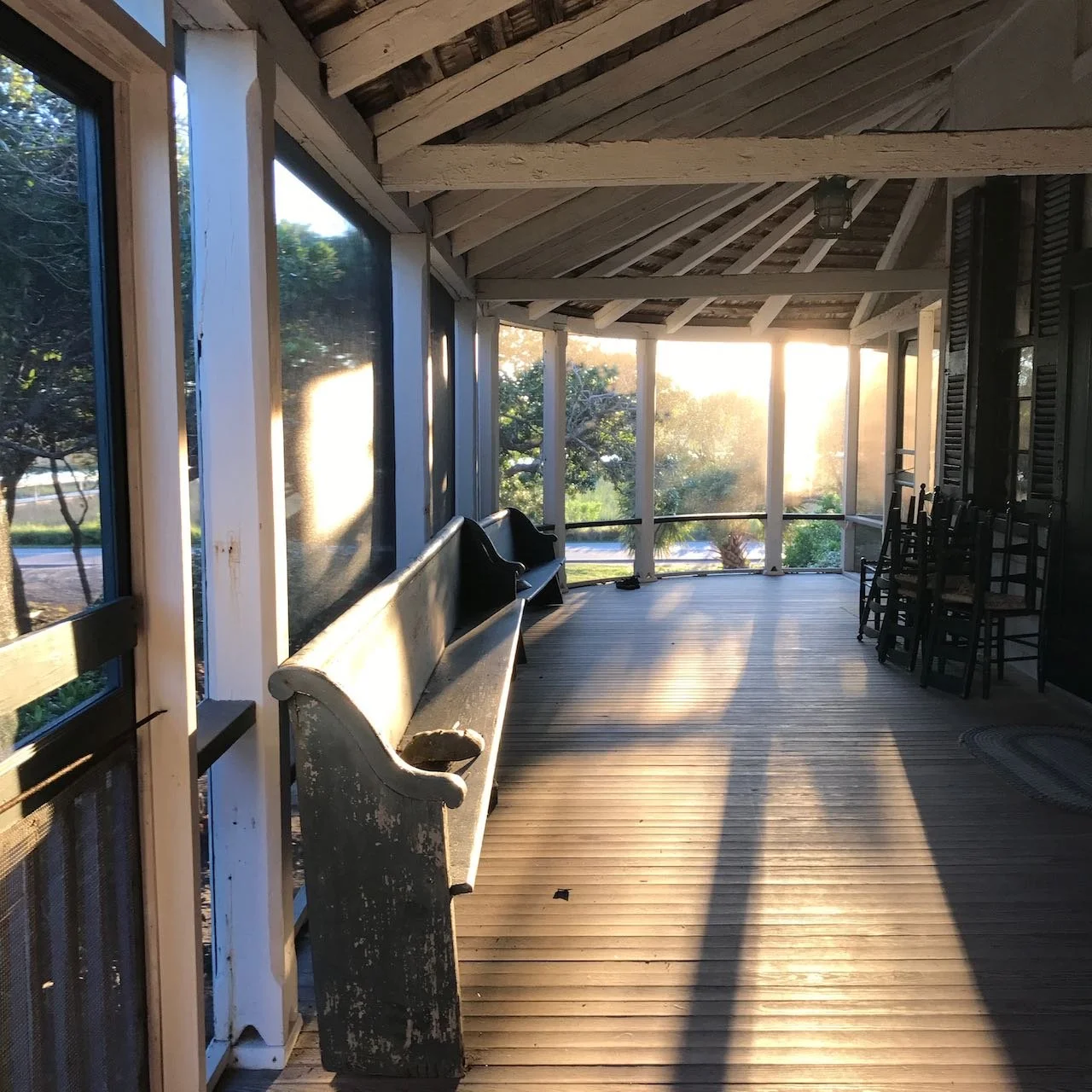
A screen porch that goes on forever, and has lasted forever…
The New England-style beach house understands something that the contemporary STR often doesn't: that sufficiency, when the point is elsewhere, is not scarcity. A family in a Cape Cod cottage for two weeks doesn't need a chef's kitchen or a media room. They need a table big enough for everyone, a place to rinse off the sand, a porch where the hours can pass without anyone noticing. The house serves the beach and the water and the fog-morning walks. It does not compete with them.
This compression also produces something architecturally interesting: the houses are honest about their priorities. The porch is larger than the living room. The outdoor shower is better appointed than the indoor one. These choices communicate what the space is for — and a guest who understands what a space is for arrives oriented, ready, less likely to feel that something is missing.
The English Countryside Letting
The British holiday letting tradition is structurally different from its American counterparts, but also more like the original ethos of Airbnb.
In the classic English letting, you are not renting a purpose-built vacation property. You are renting someone's house — temporarily vacated, still inhabited in all the ways that matter. The family portraits are still on the walls. The garden has particular requirements and a specific character. The kitchen drawers contain the actual objects of an actual domestic life. The bookshelves hold what someone actually reads.
I haven't stayed in one myself, but I've read about hundreds of them — they run through English fiction like a recurring dream. Elizabeth Bowen’s houses, rented or borrowed or temporarily occupied, carry the full weight of the families who furnished them, and her characters feel that weight the moment they walk in. In Sylvia Townsend Warner’s wonderful novel Lolly Willowes (which every woman of a certain age must read) letting a house leads protagonist Laura to an entirely new mode of existence. The letting guest in these novels inherits something.
You become, for a fortnight, or a summer, or a year, an occupant of another kind of life entirely — not a guest in a neutral space, but a temporary inhabitant of a specific one. Teen rapper Ian has a viral rap where he announces over and over “That is not your house, it’s an Airbnb.” He’s calling out a faker making deceptive content, but he reminds me of something useful: the English letting tradition inverts the anxiety entirely. The house's identity is so clearly present that there's no confusion about whose it is. The guest is a visitor to a life, not a consumer of a product. There is a pleasure on walking onto a new stage and inhabiting a new character for a specified time period.
When the host and guest are accomplices in this theater, guests have the richest experience — and, incidentally, the most memorable stays and hosts have the most loyal repeat visitors. Guests who feel they have been admitted somewhere particular, somewhere that has a self, remember it. They return.
The Tradition of Self Knowledge
The Adirondack camp, the Cape Cod beach house, and the English countryside letting have very little in common aesthetically. But they share a structural feature: a settled character that predates the guest.
Each tradition produces spaces that know what they are. That knowledge is legible to the visitor from the moment of arrival. It creates orientation, ease, the particular pleasure of being somewhere that has already been decided. No one arriving at a great camp has to wonder what the aesthetic is. No one on a Cape Cod porch at dusk has to wonder what they're supposed to be doing.
The contemporary STR that has been staged to offend no one has surrendered this advantage entirely. A space designed to alienate no one has, by the same operation, become interesting to no one. The neutral palette, the matching towels, the Keurig and the Ring doorbell — these things are not wrong, exactly. They are just uninhabited. And guests feel that absence even when they can't name it.
Accumulated Character
There is a specific class of object that does more psychological work to create this feeling of a space knowing itself more than anything you could deliberately choose: the thing that is there because it has always been there.
At one of our South Carolina beach houses there was a Big Mouth Billy Bass mounted on the wall — a singing animatronic fish that was a visual meme in the late nineties. It was horrible. We were teens. We adored it. We pressed its button constantly and drove everyone mad. Nobody staged Big Mouth Billy Bass. It survived, likely through a combination of inertia and an owner’s unwillingness to part with a bad gift, and in surviving it became one of the things we loved most about the place.
That is accumulated character. It cannot be purchased or installed. It arrives by staying.
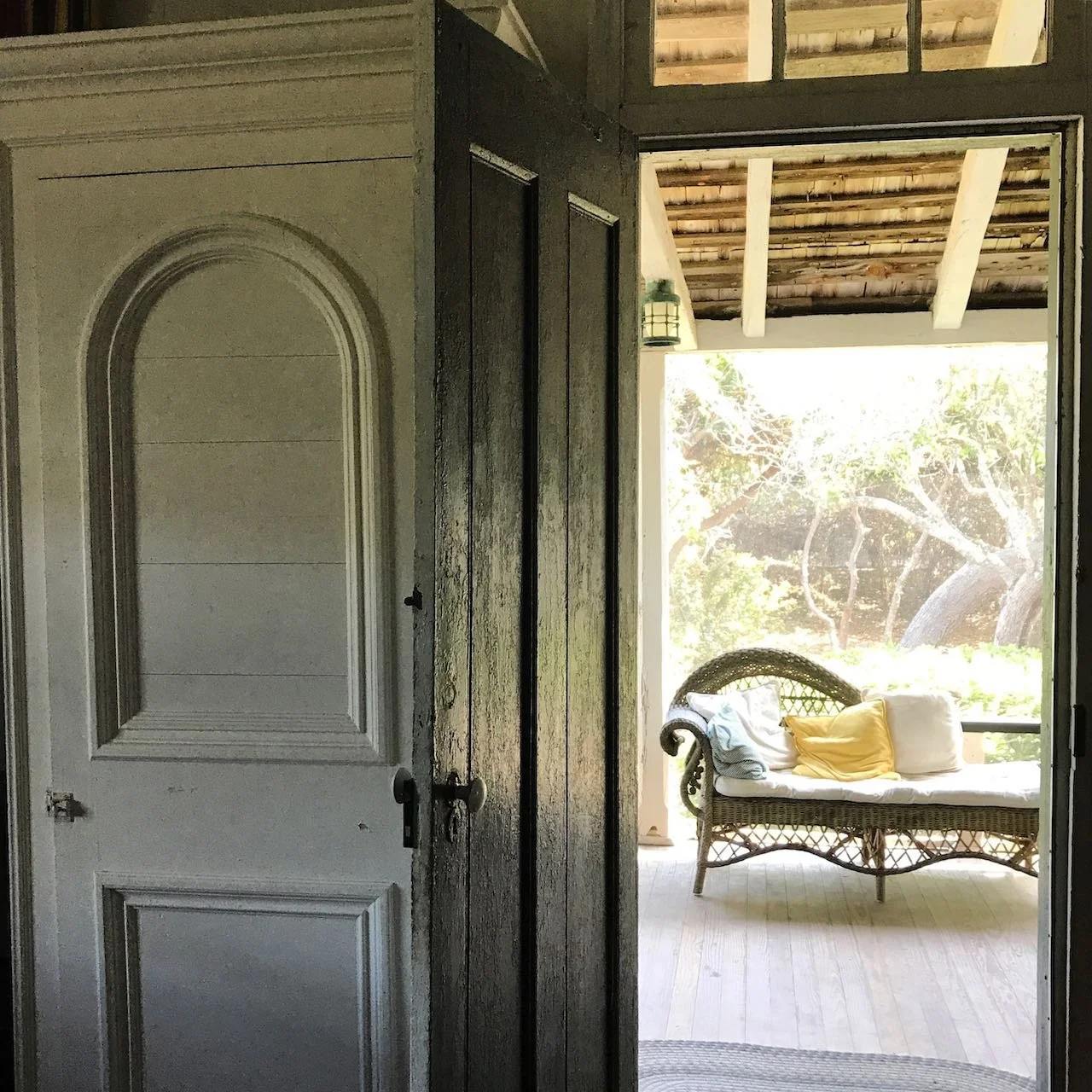
The accumulated character of piling pillows and aging paint.
When your guest returns for a third summer she knows where the can opener lives. She knows which burner runs hot and which chair on the porch has the best sightline to the water. She knows, in the way you know your grandmother's kitchen, how the space works and what it expects of her. That knowledge is a form of belonging, and belonging is what people are looking for when they book a cottage rather than a hotel room.
Your guests feel the difference between accumulated and design character. Accumulated character is the result of time — objects that stayed; surfaces that developed patina; while designed character is the result of intention — carefully sourced vintage pieces, deliberate rusticity, an aesthetic applied to a space from the outside.
Both can work. But accumulated character carries an authority that design can only approximate, and guests sense the difference. This is not an argument against design — it's an argument for design that leaves room for accumulation, that invites the guest to participate in it over time. The repeat guest who brings back a small piece of local flotsam and leaves it on the windowsill is doing something real. She is contributing to the character of the place. Let her.
Nostalgia as Design
These traditions persist — across generations, across the shift to the platform economy, across a century of changing vacation patterns — because they answer something that does not change: the desire to inhabit, not just occupy.
Occupation is what you do in a hotel space. You pass through; the room resets; no trace remains. Occupation carries the connotation of the victor, of the warrior forcing himself into a place to make it his own, until the revolution throws him out.
Inhabiting is a horse of a different color. Inhabiting is taking up a space, learning its particularities, and acquiring the small knowledge of how it works, where things are, and what a space sounds like at night. Inhabiting is wearing the space, sliding into it’s rhythms, having its character temporarily co-inhabit yours.
The summer cottage tradition understood this long before Airbnb existed. The families who returned to the same lake camp summer after summer, who knew the dock in all its wobble and the particular mugs and the shelf of paperbacks — they were not making a logistical choice. They were practicing a form of attachment.
For hosts who are building rentals now — even new ones, even purpose-built ones — this is actually good news. Memory does not require antiquity. It requires intention. A space that is designed to have a self, that is furnished with objects that have histories, that is tended with enough care to develop character over time: that space will accumulate its own tradition. Remember your guest who returns three seasons in a row and knows where the can opener is — she is your tradition beginning.
Build toward her.
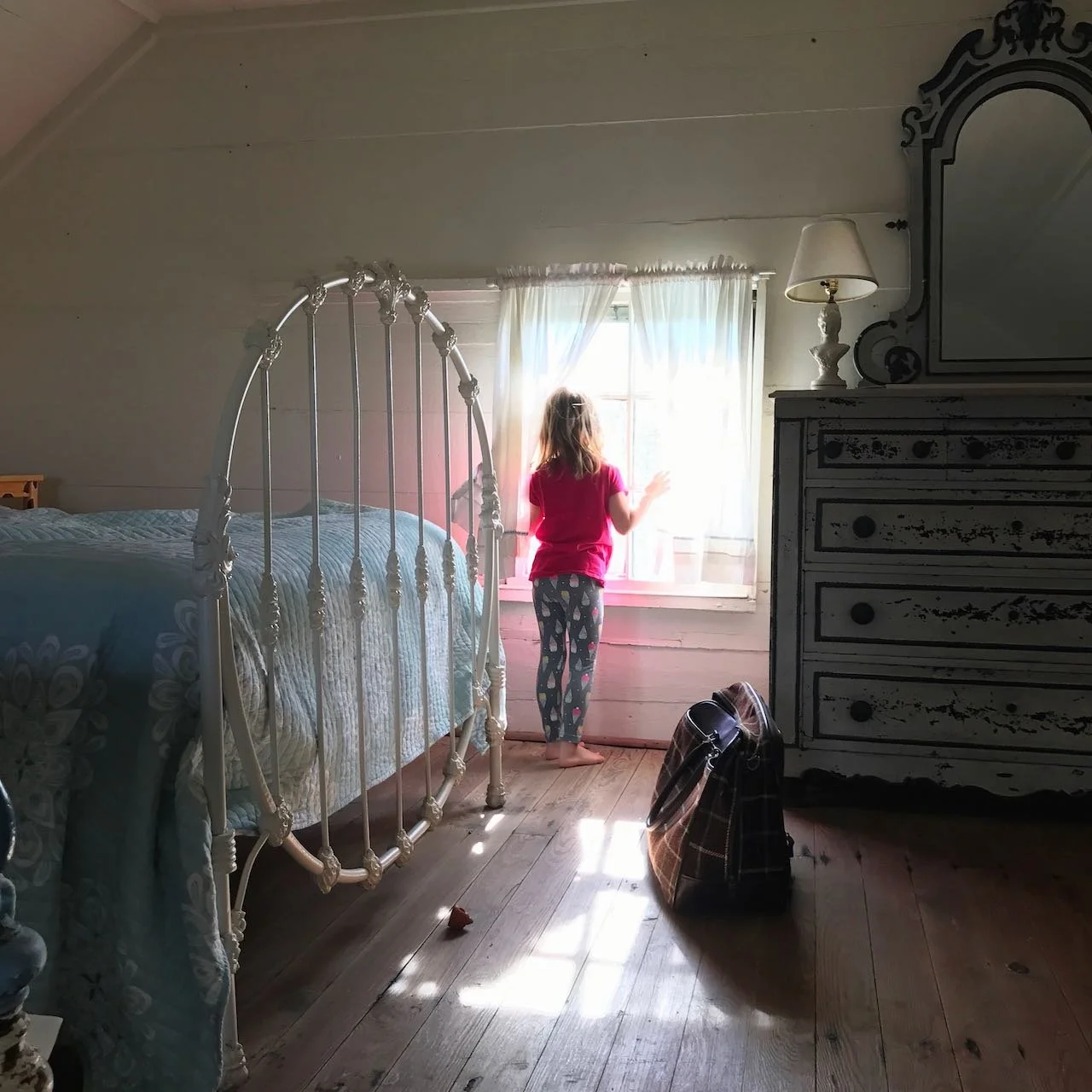
Saying goodbye, and hoping to come back next year…