How I became an Airbnb host
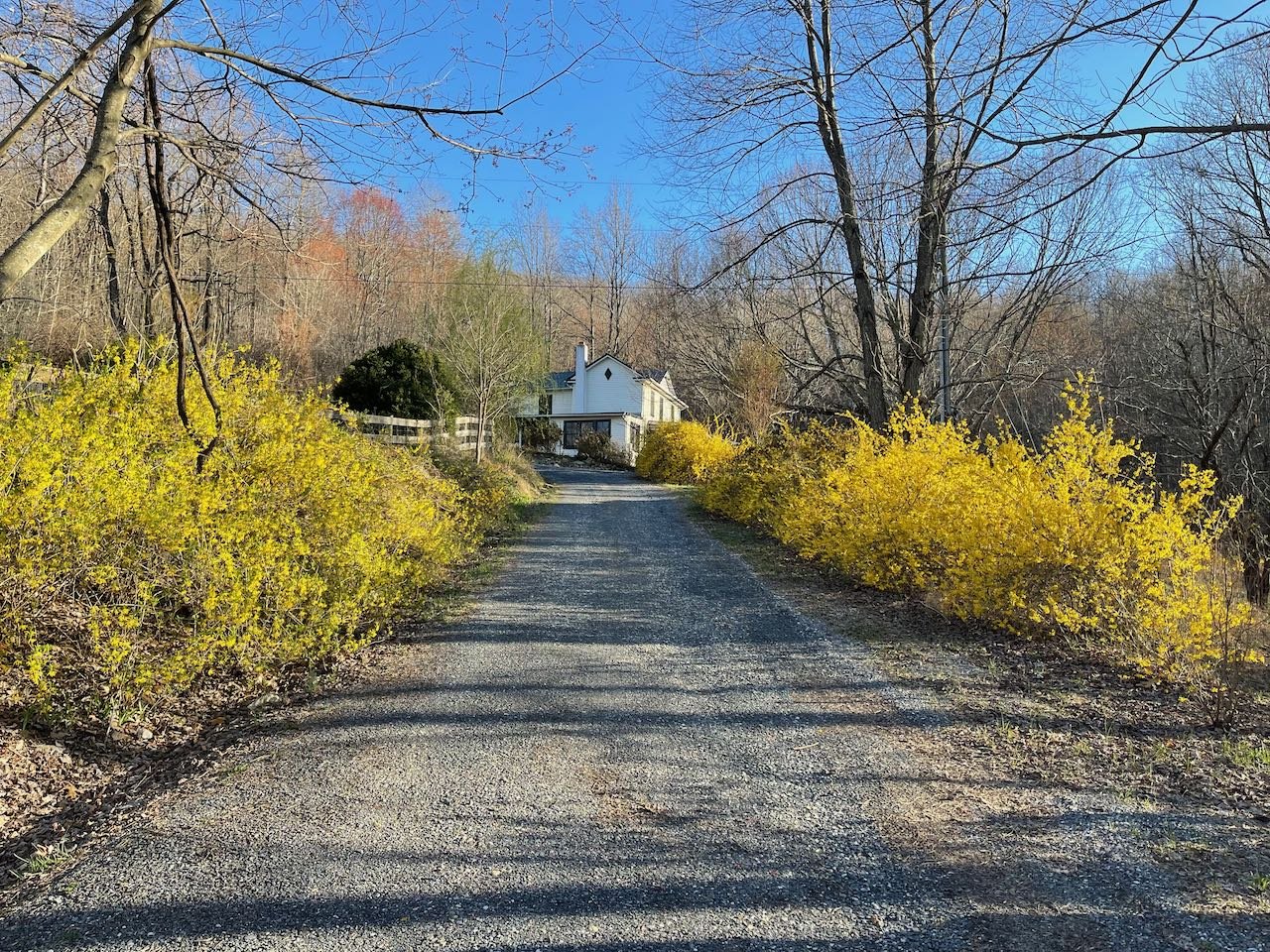
Sharing our farm with others always felt like the right thing to do.
In 2012 I was pregnant with my third child, teaching English at a small liberal arts college in Memphis, Tennessee, and so ready to return to Virginia, a state and landscape I’d fallen in love with during graduate school at the University of Virginia.
My husband and I had been fantasy house shopping for years, and we were finally able to pull the trigger that summer. The 10 acre mountain “farm” we bought came with a tenant in a mobile home, which really helped with the mortgage payment, and when he moved out a year later, we decided to try Airbnb so that we had more control over who was on our property (we had 3 kids 5 and under), real privacy when no one was visiting, and (hopefully) increased income to off-set the mortgage even more.
It took me about 3 weeks to knock the mobile home into shape. It was a model from the 1960s, and had a wonderful built-in yellow-enameled steel kitchen. It was very funky, but the outside felt sturdy— the previous owners had clad it in wood siding and added a large porch. I painted every room with colors I mixed myself from the off-tint cans behind the counter at Benjamin Moore ($5 for a gallon of $100 paint!), furnished it with extra vintage pieces that didn’t fit in our house, and with striking thrift store pick-ups. I found colorful linens, pulled together a great collection of funky art and decor, vintage china and cookware, new towels & organic-cotton sheets, and we were off!
I branded it as a Vintage Getaway, highlighted the lack of TV and internet as an asset, put out a jar of my homemade granola, a bag of our locally roasted coffee, some homemade cookies, yogurt, and eggs from our hens, and within a few months I had a popular rental on my hands.
I learned so much my first year— but my innate strengths made it feel pretty seamless, and I didn’t have any other dramatically difficult guests I heard about later on social media (not much Airbnb social media at all in 2013). I knew I wanted a robust house manual, because when I travelled, I relied on them for real advice. I loved my neighborhood, and I wanted my guests to get to go to all those cool spots that that a while to figure out— so I told them about them, and shared ALL my opinions. I wanted to make it family friendly, but not naive, so I thought really hard about what I was putting in the space, and how folks would use it.
I wanted every spot to be a little surprising— every decision to feel intentional. I didn’t have (or spend) much money— I used what I had, creatively. I found a calendar from 1955 and hung it by the door. I used push-pins to make a little display of sepia photos and local postcards from days gone by. I found china & tourist souvenirs from the area from 50s and 60s. I found funny fridge magnets that felt right at home in a 1960s mobile home. I didn’t try to make the space into something it wasn’t— it was more like Set Decorating.
It was a smash hit.
The first year I made 3 times what I had renting it conventionally. The second year I made 5 times. I was the fourth Airbnb in my county, and as its tourism profile grew, I grew. By the 5th year, the cottage was getting beat-up, and we were so popular we decided to rebuild from scratch and make the kind of guest house we loved— simple but beautiful, easy-to-clean (after 5 years of cleaning an Airbnb, I had opinions), and we wanted to make something substantial that would last for 100 years, like our farm house, rather than anything disposable. I wanted lots of light to show off my oil paintings, and I wanted it to be a space that was comfortable for a variety of small groups— but I also wanted it to model how living more lightly, with less, didn’t means one had to live less beautifully.
I partnered with a talented local carpenter, ran my design by an architect friend, and scrounged all the windows off of Craigslist and Facebook. Our carpenter used all local wood, except for the major beam we had to get from Oregon. I learned how to pour concrete counters and install tile. I thought it would take 4 years for the new cottage to pay for itself. It took less than 3.
I’d already been stocking the cottage with homemade soap, and guests started asking to buy it. So I created a micro-store in the master bedroom, in a glass cabinet, and added my soaps, salves, bitters, note cards of may paintings, hand-pulled prints and my handmade ceramics that I fire in the kiln on the farm. The store became a nice profit point, and it allowed me to turn what were expenses (soap) into profit. I also started including the linens I used in the cottage, as people asked about them.
The Covid happened, and it was scary! All our guests cancelled, but we eventually found a niche with urban escapees, and pulled through. In the midst of that panic, Airbnb asked me to join a pilot program mentoring new hosts— they had noticed that I was doing something special, and it was the perfect fit for me.
When Airbnb asked me to join their host mentorship pilot — one of fifty hosts in the country — I finally understood that what I'd built was an outlier— my weird set of strengths had found a perfect home. Every choice, from the $5 off-tint paint to the poured concrete counters to the glass cabinet of homemade soap, came from the same instinct: make something intentional, not just adequate.
That instinct is teachable. I've spent over a decade helping hosts figure out what makes their space theirs — not a generic rental with white walls and a ring light, but a place guests actually remember. Whether you're just getting started or trying to understand why your bookings have plateaued, a single session can reframe the whole thing.
If any of this sounds familiar — or like something you want — I'd love to work with you. [Book a session here.]
Warmly,
Elise