Why 100% Linen Sheets Are the Best Investment for Your High-End (and Mid-tier) Short-Term Rental
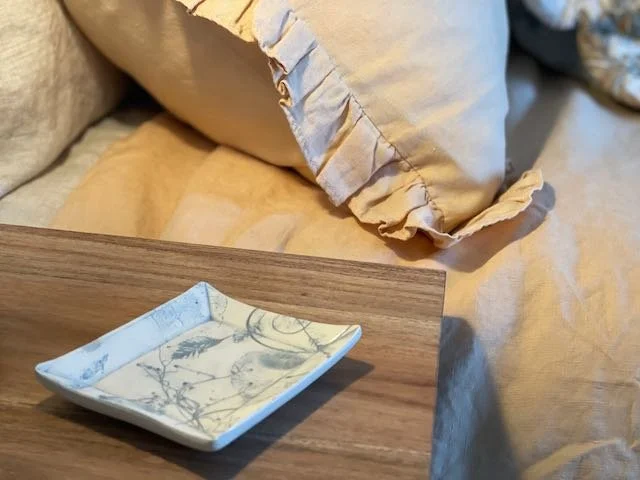
The texture of linen sheets sings though photos.
Cotton sheets are fine. They're perfectly adequate. They're what everyone expects, which is precisely the problem.
If you're running a higher-end short-term rental—something marketed as a boutique experience, a design-forward space, an escape from the ordinary—you need bedding that signals you've thought about more than just thread count and Amazon Prime delivery times.
You need linen.
The Practical Case
Linen is absurdly durable. We're talking decades of use if you treat it reasonably well. The flax fibers are naturally stronger than cotton, which means these sheets will outlast multiple sets of that Egyptian cotton you thought was an investment.
The fabric gets softer with every wash. Not worse, softer. This is the opposite of how most textiles behave. Your guests sleeping on linen sheets that have been washed fifty times are getting a better experience than your guests who slept on them new.
Linen is naturally antimicrobial and hypoallergenic. It resists bacteria and fungi. For a short-term rental where multiple strangers are sleeping in the same bed week after week, this matters more than your guests will ever know.
The fabric breathes. It wicks moisture away from the body, which means your guests sleep cooler in summer and warmer in winter. Linen regulates temperature in a way that synthetic blends and even high-quality cotton simply cannot match.
The Environmental Argument
Flax, the plant that becomes linen, requires significantly less water than cotton. Cotton can consume up to 10,000 liters of water per kilogram of fiber, while linen requires only 2,500–3,000 liters per kilogram. Some sources suggest the difference is even more dramatic. In a world where water scarcity is becoming a defining crisis, this is not a small consideration.
The carbon footprint tells a similar story. Linen emits approximately 2.1–2.5 kg of CO₂ per kilogram of fiber, while cotton emits 3.8–4.5 kg. Across its entire lifecycle, a linen shirt uses 6.4 liters of water compared to thousands of liters for a cotton shirt.
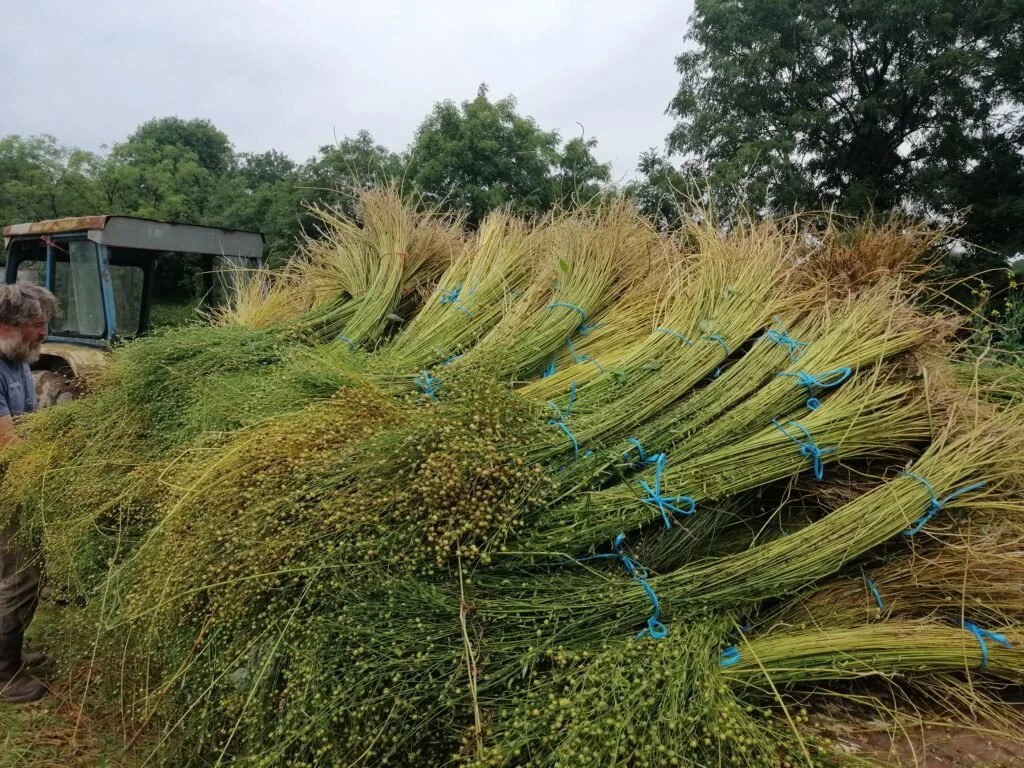
Flax , the plant we use to make linen, after harvest, before processing. Linen is one of the most environmentally responsible fibers humans make.
Flax grows in poor soil without pesticides or fertilizers. Cotton, by contrast, is one of the most pesticide-intensive crops on the planet. Every conventional cotton sheet set comes with an invisible environmental cost measured in chemical runoff and degraded topsoil.
Linen is biodegradable. When these sheets finally reach the end of their very long life, they'll break down naturally instead of sitting in a landfill for the next several centuries like polyester-blend alternatives.
The production process for linen uses every part of the flax plant. The seeds become linseed oil. The fiber becomes fabric. Even the woody core material gets used in paper and chipboard manufacturing. It's a closed-loop system that generates minimal waste.
If you're marketing your property to the kind of guests who care about sustainability—and in 2025, that's most travelers under 50—linen sheets send a clear message. You've thought about your environmental impact. You've made choices that align with values beyond just maximizing profit margins.
The Aesthetic Payoff
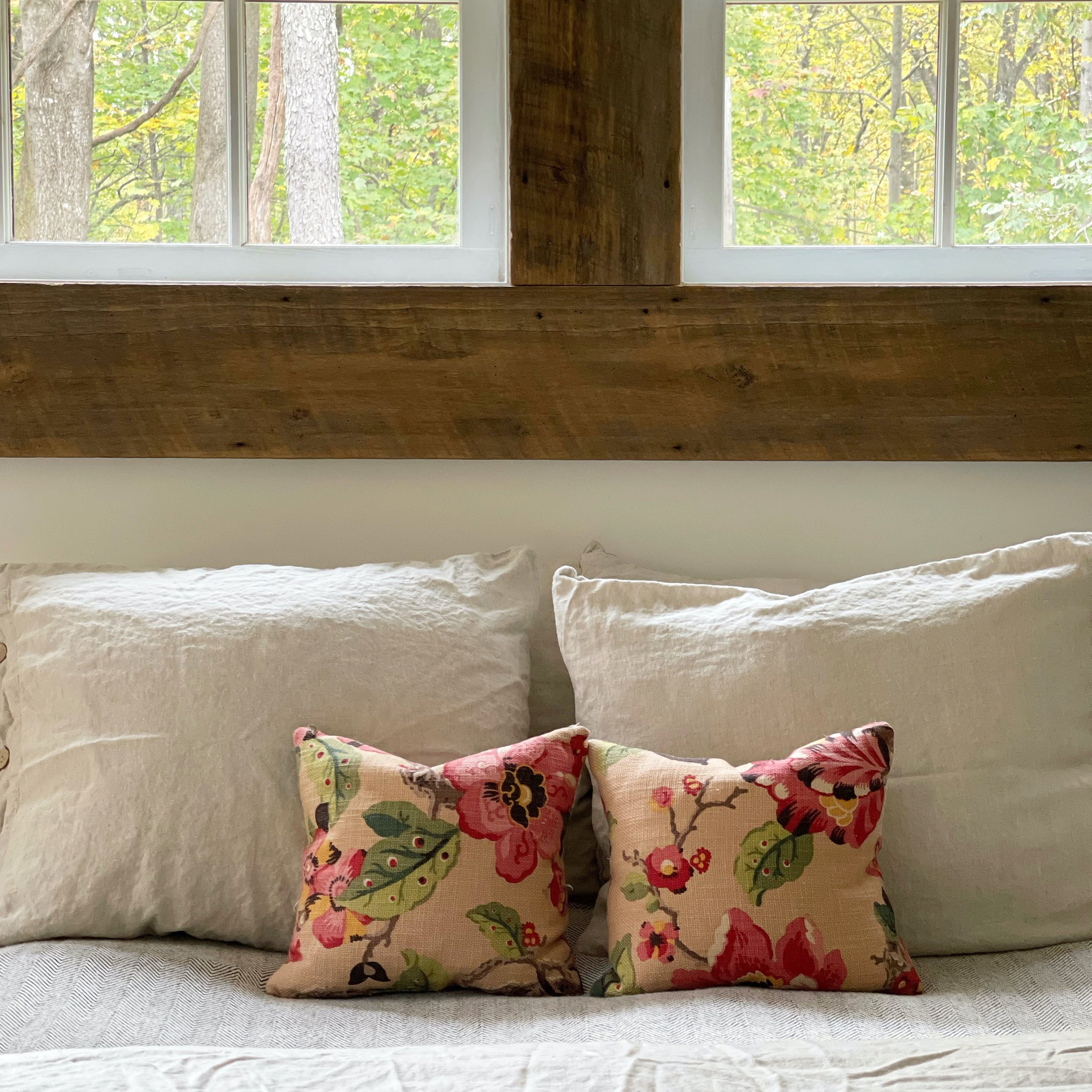
Linen doesn’t have to be ironed— rumpled from the dryer can look casual and bohemian.
Linen has texture. It wrinkles naturally, which makes it look lived-in and relaxed rather than sterile and hotel-generic. This is the boho-chic aesthetic that dominates design Instagram, Airbnb's own marketing materials, and every shelter magazine worth reading.
The fabric photographs beautifully. Those slightly rumpled, softly draping sheets create visual interest in your listing photos. They suggest a space that's sophisticated without being uptight. Approachable luxury. Effortless style.
This matters more than you might think. Guests scroll through dozens of listings. The ones with thoughtful design details—like linen bedding, vintage furniture, and plants that are actually alive—stand out. They signal that someone cares about this space, which makes guests trust that other details have been considered too.
Linen comes in colors that work with almost any design scheme. The natural variations in the fabric mean that even neutral tones have depth and character. You're not looking at flat, boring beige. You're looking at something with visual complexity that elevates the entire room.
The Guest Experience Factor
Most people have never slept on linen sheets. They've heard about them, maybe read about them in lifestyle magazines, but they haven't experienced them firsthand. Linen bedding is still uncommon enough to register as special.
Guests notice. They comment on it in reviews. They ask where you sourced them. The texture feels different against skin—cooler, somehow more substantial than cotton. The slight weight of the fabric creates a sense of being genuinely cocooned rather than just covered.
This tactile novelty becomes part of the experience you're selling. Guests remember sleeping exceptionally well. They remember the unusual, pleasant feel of the bedding. These sense memories attach to their overall impression of your property in ways that standard cotton sheets simply don't achieve.
For travelers accustomed to hotel chains and standardized experiences, linen sheets signal that they've landed somewhere different. Somewhere someone made intentional choices about guest comfort rather than just ordering from a hospitality supply catalog. That distinction shows up in your reviews and your repeat booking rate.
A Brief History Worth Knowing
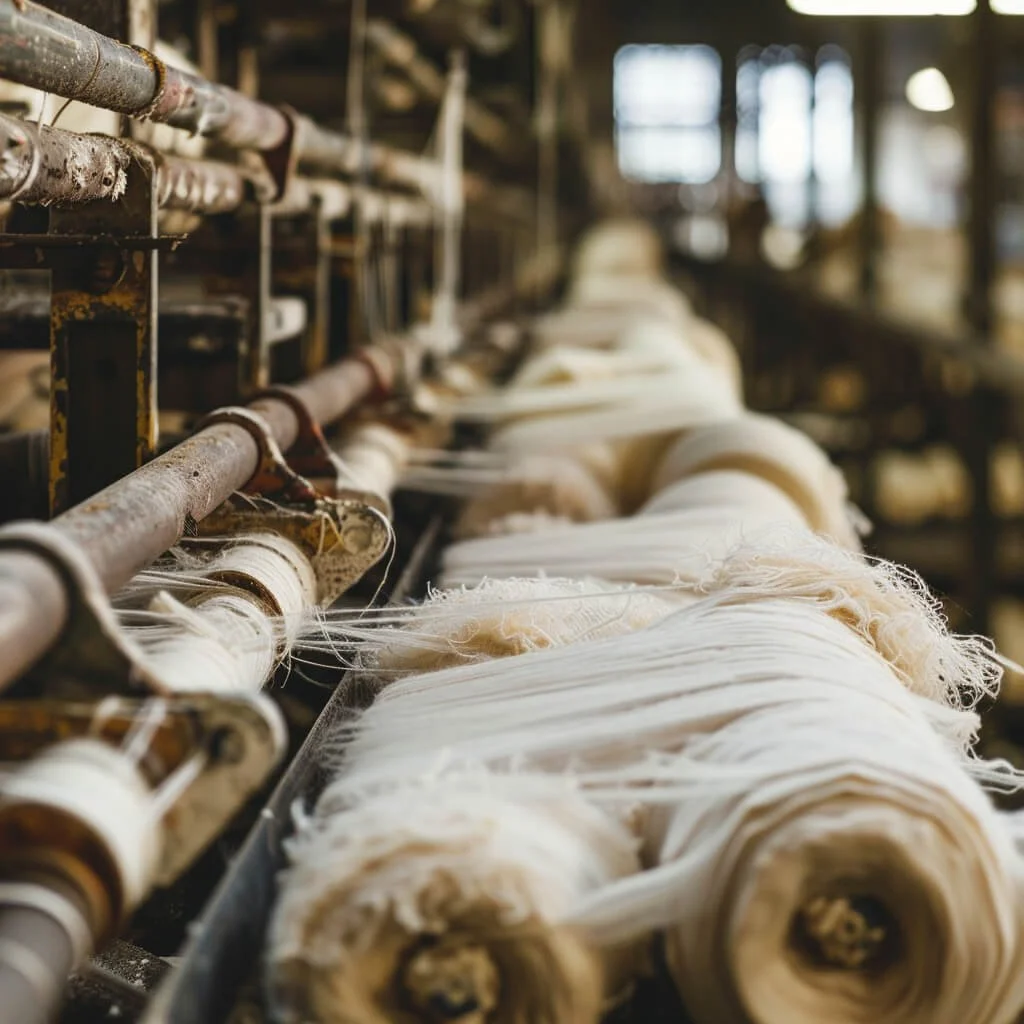
Combed flax being spun into linen fiber.
Linen is humanity's oldest textile fiber. We've been making fabric from flax for at least 30,000 years, probably longer. Ancient Egyptians wrapped their mummies in linen. The Phoenicians traded it across the Mediterranean. Medieval Europeans measured wealth partly in linen holdings.
The fabric was so central to daily life that it embedded itself in language. When we talk about "the line" in phrases like "walking the line" or "toeing the line," we're referencing the linen bleaching process where fabric was literally laid out in lines on the ground. "Lining up" comes from the same origin.
The phrase "flaxen-haired" to describe blonde hair comes directly from the pale color of processed flax fibers. When someone examines something closely, they're giving it "a fine-toothed comb"—a reference to the combs used to prepare flax for spinning, called "heckles." To "heckle" someone originally meant to rake them over the coals the way you'd process flax through sharp metal combs.
Even our modern term "spin a yarn" comes from the flax-spinning process. The cultural fingerprints of linen production are everywhere in English, which tells you how central this fabric was to human civilization for thousands of years.
The Investment Reality
Linen sheets cost more upfront. A quality queen set will run you $200-400, compared to $50-150 for decent cotton. This is where most hosts stop, decide it's not worth it, and order another set from Amazon.
Do the math over time. If your linen sheets last ten years—which they will—and you're replacing cotton sheets every two years, you've broken even. Except you haven't really, because the linen sheets are actually improving with age while the cotton ones are deteriorating.
Factor in the marketing value. Linen bedding is a detail worth mentioning in your listing description. It's something design-conscious guests actively search for. It's a differentiator in a crowded market.
Premium bedding justifies premium pricing. Guests who notice and appreciate linen sheets are guests who understand quality. They're guests willing to pay for thoughtful details. They're your ideal customer base.
Care Considerations
Linen is remarkably low-maintenance for something that sounds fancy. Wash it in cool or warm water. Skip the fabric softener, which just coats the fibers and defeats the purpose. Tumble dry on low or line dry if you have the setup for it.
The wrinkles are a feature, not a bug. Embrace them. If you're the type of person who needs perfectly crisp, wrinkle-free bedding, linen will drive you mad and you should stick with percale cotton. But if you can accept that rumpled elegance is actually elegant, you'll be fine.
Linen can handle bleach occasionally, which matters for a short-term rental where you need to ensure everything is genuinely clean between guests. The fabric is tough enough to withstand the kind of deep cleaning that would shred lesser textiles.
The Bottom Line
Linen sheets are one of those rare purchases where environmental responsibility, aesthetic appeal, and practical durability all align. You're not choosing between doing the right thing and running a profitable business. You're doing both simultaneously.
Your guests sleep better. Your listings photograph better. Your environmental footprint shrinks. Your bedding lasts longer. The math works from every angle.
Make the investment. Buy the linen sheets. Watch them get softer and better while everything else in your property slowly degrades. Sometimes the premium option is premium for actual reasons.
See some of my favorite linen sheets here, on my Benable link page.